 Image 1 of 1
Quick Start Highlight
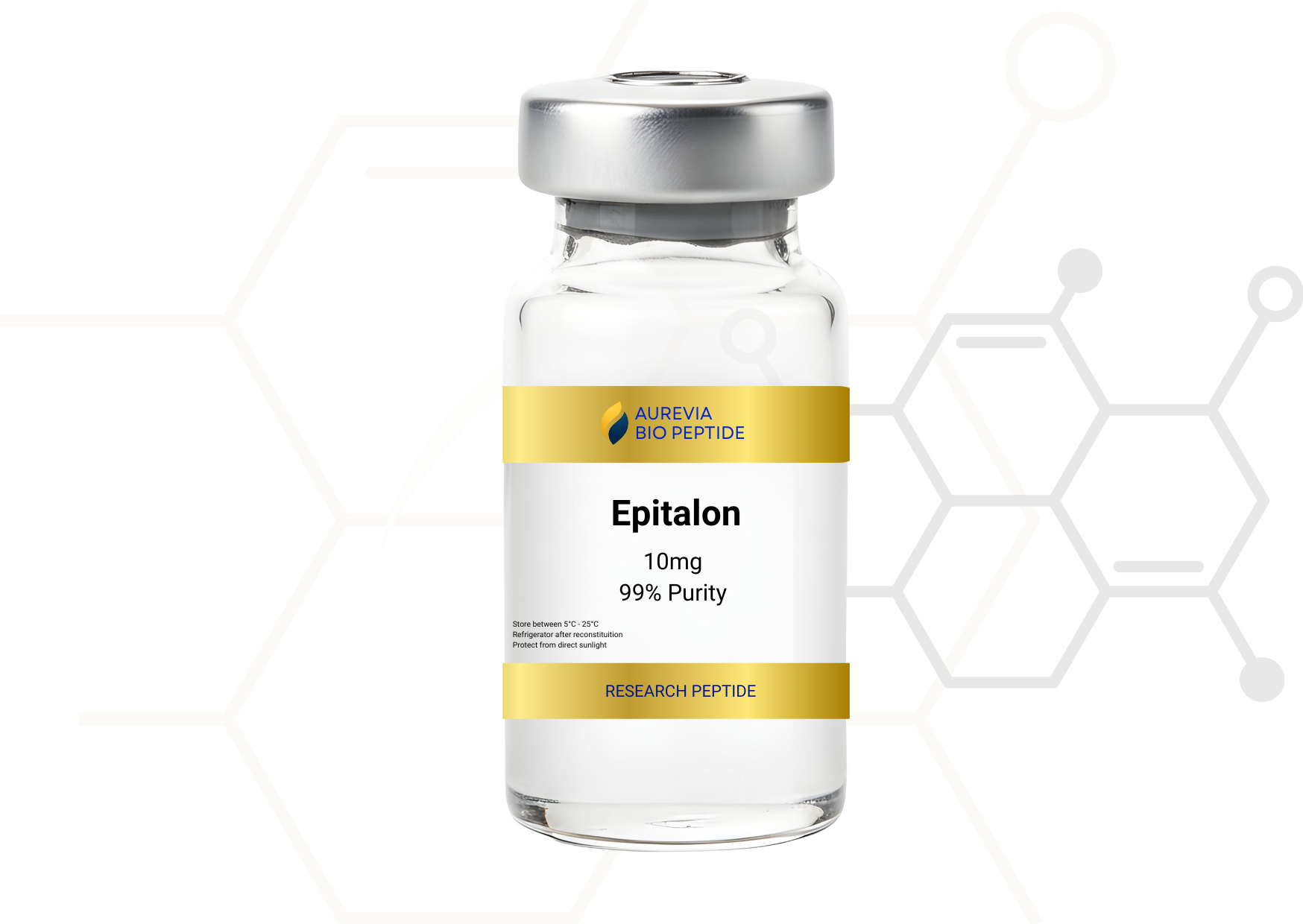
Epitalon (also spelled Epithalon or Epithalone) is a synthetic tetrapeptide composed of four amino acids: alanine, glutamic acid, aspartic acid, and glycine (sequence: Ala-Glu-Asp-Gly). It was derived from Epithalamin, a natural polypeptide extract obtained from the pineal gland. Developed by Russian gerontologist Vladimir Khavinson, Epitalon has been studied for its potential to regulate aging, improve circadian rhythms, and activate telomerase — a key enzyme tied to DNA protection and cellular longevity.
Research on Epitalon largely originates from the St. Petersburg Institute of Bioregulation and Gerontology, where Khavinson and his team conducted both animal and human studies to investigate its role in telomere lengthening, immune support, and overall healthspan improvements.
Benefits of Epitalon
Epitalon sits at the intersection of cellular longevity, circadian biology, and oxidative defense. The headline: most evidence is preclinical or from small, mostly Russian human studies—promising, but not yet canon. Here’s what the best-available data actually support:
Longevity & telomere protection
In human cell models, Epitalon (AEDG) activates telomerase and lengthens telomeres—core mechanisms tied to replicative aging. Animal lifespan findings are encouraging in several strains but mixed in others, underscoring that mechanism ≠ guaranteed lifespan extension across species. (PubMed)Sleep quality & circadian rhythm support
Older adults with low nighttime melatonin showed restored melatonin output and more youthful circadian patterns after courses of pineal peptides (notably the parent extract, Epithalamin). Independent reviewers note that results for synthetic Epitalon are promising in primates and mixed in rodents—so the circadian signal is real but not fully settled. (PubMed)Immune system tone (aging immunity context)
Long-running clinical cohorts using Epithalamin reported improvements across cardiovascular, endocrine, immune, and nervous system indices, alongside lower all-cause and CV mortality—findings that need independent confirmation but line up with the broader biology of immunosenescence. Mechanistically, this tracks with the central role of the thymus and circadian signals in T-cell competence as we age.Antioxidant & anti-cancer signals (preclinical)
Epitalon and its pineal extract cousin show antioxidant activity in cells and animals, reducing markers of oxidative damage—a driver of mitochondrial and DNA stress. Multiple rodent models also report suppressed spontaneous tumors or carcinogenesis with Epitalon; these are animal data and should be treated as hypothesis-generating for humans. (ScienceDirect)Quality of life & metabolic health (elderly cohorts)
In long follow-ups, Epithalamin-treated older adults demonstrated better exercise tolerance, more stable melatonin rhythms, and normalization of carbohydrate and lipid metabolism—signals consistent with improved healthspan, though again centered in one research network.
How Does Epitalon Work?
Epitalon (AEDG) isn’t a hormone—you won’t “feel” it hit. It’s a regulatory tetrapeptide that nudges the cell’s longevity machinery: genome protection, circadian timing, and redox balance. Translation: it helps your cells act younger, longer—at least in lab and early human data.
Telomerase & telomeres (cellular “caps” that guard DNA)
In cultured human somatic cells, Epitalon switched on telomerase and lengthened telomeres—key markers tied to replicative lifespan. This is foundational work that still anchors the field today. (PubMed)Pineal signaling, melatonin & circadian rhythm
Pineal-derived preparations closely related to Epitalon restored night-time melatonin output and “younger” circadian patterns in older adults with low baseline secretion, pointing to a potential clock-stabilizing effect with age. Independent reviewers note mixed findings for synthetic Epitalon itself here—so promising, but not settled. (PubMed)Gene expression & epigenetic control
Beyond one pathway, Epitalon modulates transcription programs linked to stress resistance and repair. In human mesenchymal stem cells, it upregulated neurogenic markers and protein synthesis—evidence of peptide-driven, epigenetic reprogramming of cell fate cues. (PMC)Antioxidant defense & mitochondrial stress
Epitalon demonstrates direct and indirect antioxidant activity—lowering oxidative stress signals that drive DNA and mitochondrial damage. Classic work showed robust redox effects, and new studies report protection and faster wound closure in high-glucose human retinal cells (a brutal oxidative model). Mechanistically, this aligns with reduced ROS and fibrosis-related signaling. (ScienceDirect)Bottom line: Epitalon’s mechanistic profile hits four big levers of healthy aging—telomere maintenance, circadian alignment, gene-level resilience, and oxidative control. Most evidence is preclinical or from small, regional human studies, so treat it as cutting-edge, not canon—but the biology is genuinely compelling. (Alzheimer's Drug Discovery Foundation)
Potential Side Effects
Most side effects appear to be minor and short-lived. The most common include:
Local irritation or redness at the injection site (for subcutaneous or intramuscular administration)
Mild headaches or dizziness
Occasional fatigue or nausea
Dosing & Reconstitution Guide
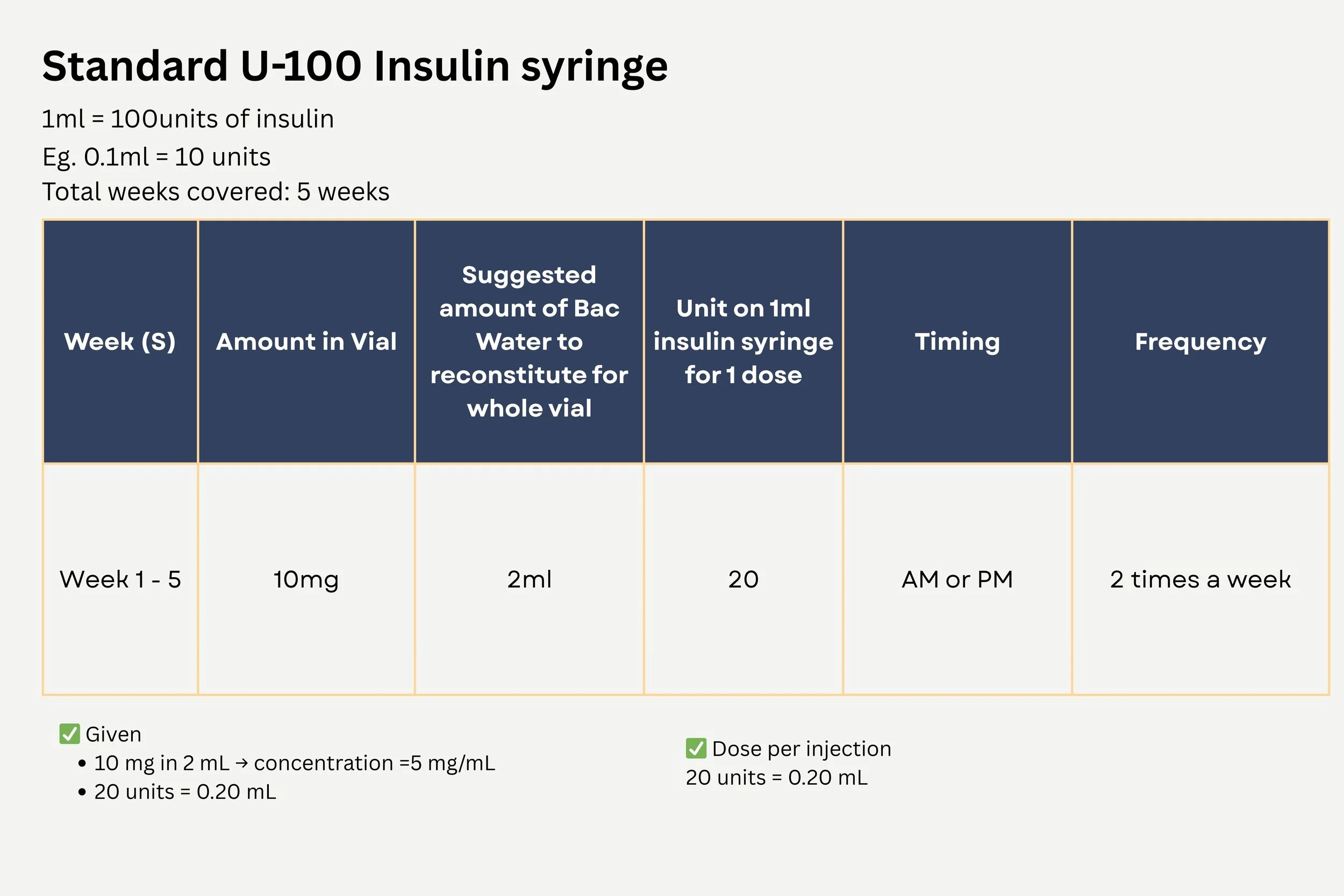
Educational guide for reconstitution and weekly dosing